5 Powerful Interior House Painting Safety Tips Every Littleton Homeowner Should Know
4 min read
Interior house painting safety should be your first priority when planning interior house painting in Littleton, CO. Sure, new paint adds life to your home, but safety should never take a back seat. As a long-time interior house painter in Littleton, CO, I’ve seen what happens when ventilation and prep are skipped—and trust me, it’s not worth it. From headaches to lingering odors, small mistakes can lead to big frustrations.
Let’s break down how to make your next paint job safer and more comfortable from start to finish.
Key Takeaways
- Ventilation is the foundation of safe painting, not a bonus.
- Low-VOC paint and ventilation are a solid combo but still require airflow.
- Safety gear can keep fumes and chemicals from getting the best of you.
- Taking breaks while painting keeps energy high and exposure low.
- Proper cleanup cuts down on lingering smells and makes your space livable faster.
Ventilation Comes First, Every Time
One of the first homes I painted in Littleton had windows that barely opened. I still remember the owner saying, “We’ll just crack the door.” But without a real airflow setup, even water-based paint left the room smelling for days.
Interior painting ventilation is the starting line, not an afterthought.
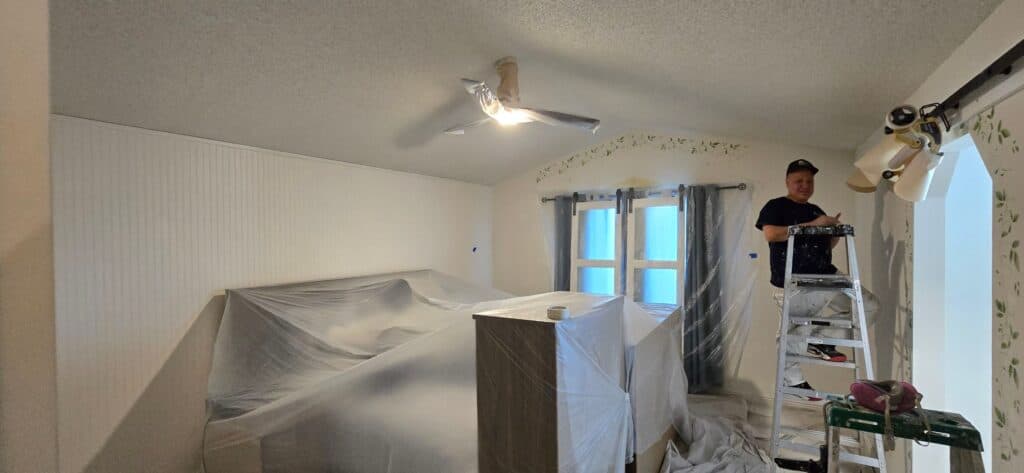
Open windows, place box fans, and create a steady breeze moving through your space. If you’re painting a smaller area like a bathroom or closet, even a single fan pulling air out can help more than you’d think.
Proper ventilation when painting indoors helps reduce exposure to fumes, speeds up drying, and keeps the room more comfortable to work in.
Interior House Painting Safety Tips in Littleton, CO That Actually Make a Difference
Whether you’re repainting a guest room or updating your kitchen, these practical steps can make the entire experience smoother—and safer.
Prioritize Airflow With Every Project
Fresh air is your best friend. Start by opening windows across from each other. Then place a fan in one to exhaust air out and another to draw fresh air in.
This cross-ventilation system keeps fumes from building up and helps maintain better indoor air. It’s a key part of safe interior painting that even pros swear by.
I once painted a nursery on a chilly spring day. We bundled up but kept the windows open the whole time. The result? No leftover smell, and the baby could move in the next day.
Don’t Just Pick Paint by Color—Go Low-VOC
Most clients these days ask for eco-friendly paints, and I always recommend low-VOC paint and ventilation strategies together.
These paints release fewer chemicals, but they’re not fume-free. That means you still need fans and open windows. I recently had a homeowner thank me for suggesting a brand that smelled less harsh and dried quickly—thanks to the right ventilation.
Combining low-VOC options with airflow protects your health and your home.
Gear Up with the Right Protection
I get it—masks and goggles might feel over the top. But after breathing in fumes for hours, you’ll wish you had them. Even when I use water-based paints, I wear gloves and a simple respirator.
One client told me, “I didn’t think painting could make me feel sick,” after skipping safety gear. A few dollars in equipment could’ve saved him that trouble.
Better safe than sorry when it comes to interior paint fumes safety.
Take Breaks, Especially on Bigger Projects
Paint in sections. After every hour or so, walk away from the space and get some fresh air. If you’re working in multiple rooms, stagger them to allow dry time and ventilation in between.
These breaks help reduce exposure, give the fumes time to clear, and keep your energy level up. You’ll work better, feel better, and likely do a cleaner job.
Wrap Up the Right Way
Once you finish painting, don’t just leave the brushes soaking and the lids cracked open. Seal cans tightly, clean tools immediately, and get those paint-soaked rags outside.
I always suggest running an air purifier for a day or two, especially in bedrooms. It helps clear out any lingering VOCs, making the space more comfortable sooner.
Finishing strong with cleanup is just as important as how you start.
Why Hiring an Interior House Painter in Littleton, CO Can Make Things Easier
There’s no shame in calling in the pros. If you’re managing a full house, little kids, or just tight on time, hiring a trusted interior house painter in Littleton, CO is a smart move.
We know the products that work best in Colorado’s dry climate. We come prepared with fans, proper safety gear, and know exactly how to ventilate a room during painting. You don’t have to guess—you just enjoy the results.
Keep it Safe, Keep it Comfortable with Helix Painting
Interior house painting doesn’t have to be complicated, and it definitely shouldn’t leave you with headaches, nausea, or a home that smells like chemicals for days.
Ventilate from the start, pick the right products, and don’t skip on cleanup.
Need help? Helix Painting proudly serves Littleton, Castle Rock, and Highlands Ranch, CO. We’re ready to make your home shine—safely.
Call 720-741-6041 for your FREE estimate today. Let’s bring color into your life—the right way.